

ERP ·
5 common ERP implementation mistakes and how businesses can avoid them
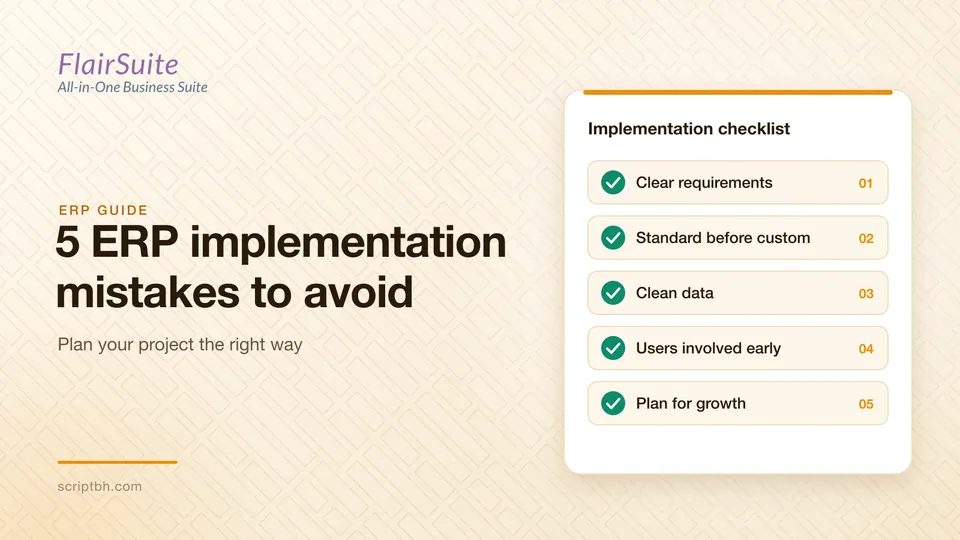
ERP implementation can significantly improve business operations, but successful implementation requires proper planning.
Here are five common mistakes businesses should avoid.
1. Starting without clear requirements
Before selecting or implementing ERP, businesses should clearly identify their processes, challenges, workflows, reporting needs, and integration requirements.
2. Customizing everything
Not every process requires custom development.
Where possible, businesses should use standard ERP functionality and customize only when there is a clear operational requirement.
3. Moving poor-quality data
Old, duplicated, or inaccurate information should be cleaned and reviewed before being migrated into a new ERP system.
4. Involving users too late
Employees who use the system every day should participate in requirements gathering, testing, and training.
This improves both system usability and user adoption.
5. Ignoring future requirements
ERP should support your business not only today but also as it grows.
Consider future users, branches, modules, integrations, mobile applications, and customer-facing services.
A better ERP implementation approach
At Script Solutions, ERP implementation can include:
- Business analysis
- Configuration
- Development
- Integration
- Data migration
- Testing
- Training
- Go-live
- Support
Planning an ERP project?
Contact Script Solutions to discuss how FlairSuite ERP can be configured around your organization’s requirements.